Category: Matches

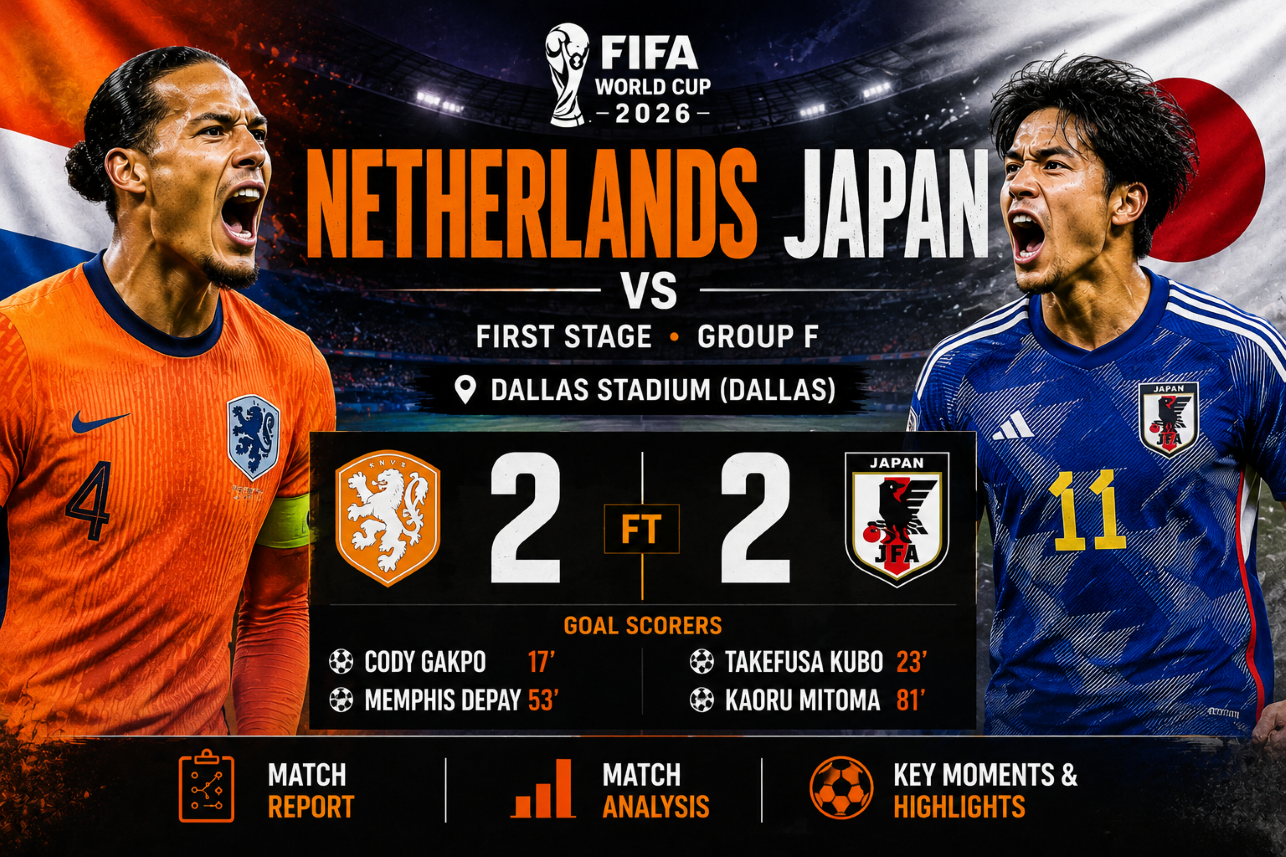
  • Netherlands 2-2 Japan: Thrilling Group F Draw Keeps World Cup 2026 Qualification Race Wide Open

    Netherlands 2-2 Japan: Thrilling Group F Draw Keeps World Cup 2026 Qualification Race Wide Open

    Netherlands 2-2 Japan: Group F Battle Ends in an Entertaining Draw

    The Netherlands and Japan played out an exciting 2-2 draw in their FIFA World Cup 2026 Group F encounter at Dallas Stadium. Both teams showcased attacking quality, resilience, and tactical discipline in a match that kept fans engaged from the opening whistle until the final moments.

    With crucial points at stake in Group F, neither side was willing to settle for less. The contest featured four goals, several dangerous attacking moves, and dramatic momentum shifts that reflected the competitive nature of the FIFA World Cup.

    Match Summary

    The Netherlands began strongly and controlled possession during the opening stages. Their attacking pressure eventually produced the opening goal, giving the Dutch side an early advantage. However, Japan responded impressively with quick transitions and disciplined teamwork, ensuring the contest remained balanced throughout.

    As the match progressed, both teams created multiple opportunities and demonstrated why they are considered strong contenders in Group F. Neither defense was able to completely contain the opposition attack, leading to a thrilling exchange of goals.

    First Half Analysis

    The Netherlands looked dangerous during the first half, using quick passing combinations and movement in the attacking third to create opportunities. Their efforts were rewarded with an important goal that energized the team and their supporters.

    Japan responded positively by increasing the tempo and pressing higher up the pitch. Their determination paid off with an equalizer that shifted momentum and ensured the teams entered the break on level terms.

    Second Half Drama

    The second half continued at a high intensity, with both nations pushing for victory. The Netherlands regained the lead through a well-worked attacking move, but Japan once again demonstrated their fighting spirit by finding another equalizer.

    Both sides had chances to claim all three points during the closing stages, but strong defensive interventions and disciplined goalkeeping ensured the match ended in a draw.

    Key Match Statistics

    • Final Score: Netherlands 2-2 Japan
    • Competition: FIFA World Cup 2026
    • Stage: First Stage – Group F
    • Venue: Dallas Stadium, Dallas
    • Total Goals: 4
    • Result: Draw

    “A high-quality Group F encounter saw the Netherlands and Japan share the points after an entertaining 2-2 draw.”

    Impact on Group F

    The draw keeps the Group F standings highly competitive. Both teams earned a valuable point, but neither side managed to gain a decisive advantage in the race for qualification to the knockout stages.

    Goal difference and future results may become crucial factors as the group progresses, making every remaining fixture increasingly important.

    Player Performances

    Several players impressed with their technical quality, work rate, and ability to influence key moments. The attacking units of both teams created consistent problems for opposing defenses, while midfield battles played a significant role in determining the flow of the match.

    The goalkeepers also contributed important saves that prevented either team from securing a late winner.

    Looking Ahead

    The Netherlands will take confidence from their attacking performance while focusing on improving defensive consistency before their next Group F fixture. Japan, meanwhile, will be encouraged by their resilience and ability to respond whenever they fell behind.

    Both teams remain firmly in contention for qualification and will look to build on this result in the matches ahead.

    Conclusion

    The 2-2 draw between the Netherlands and Japan at Dallas Stadium delivered one of the most entertaining matches of the FIFA World Cup 2026 group stage. Featuring attacking football, dramatic momentum shifts, and four well-earned goals, the contest highlighted the quality and competitiveness of Group F. While neither team secured victory, both demonstrated why they remain strong contenders for a place in the knockout rounds.

    Note: The actual goal scorers and goal timings were not included in the match details provided. Once available, they can be inserted into the “Goal Scorers” section for a complete match report.
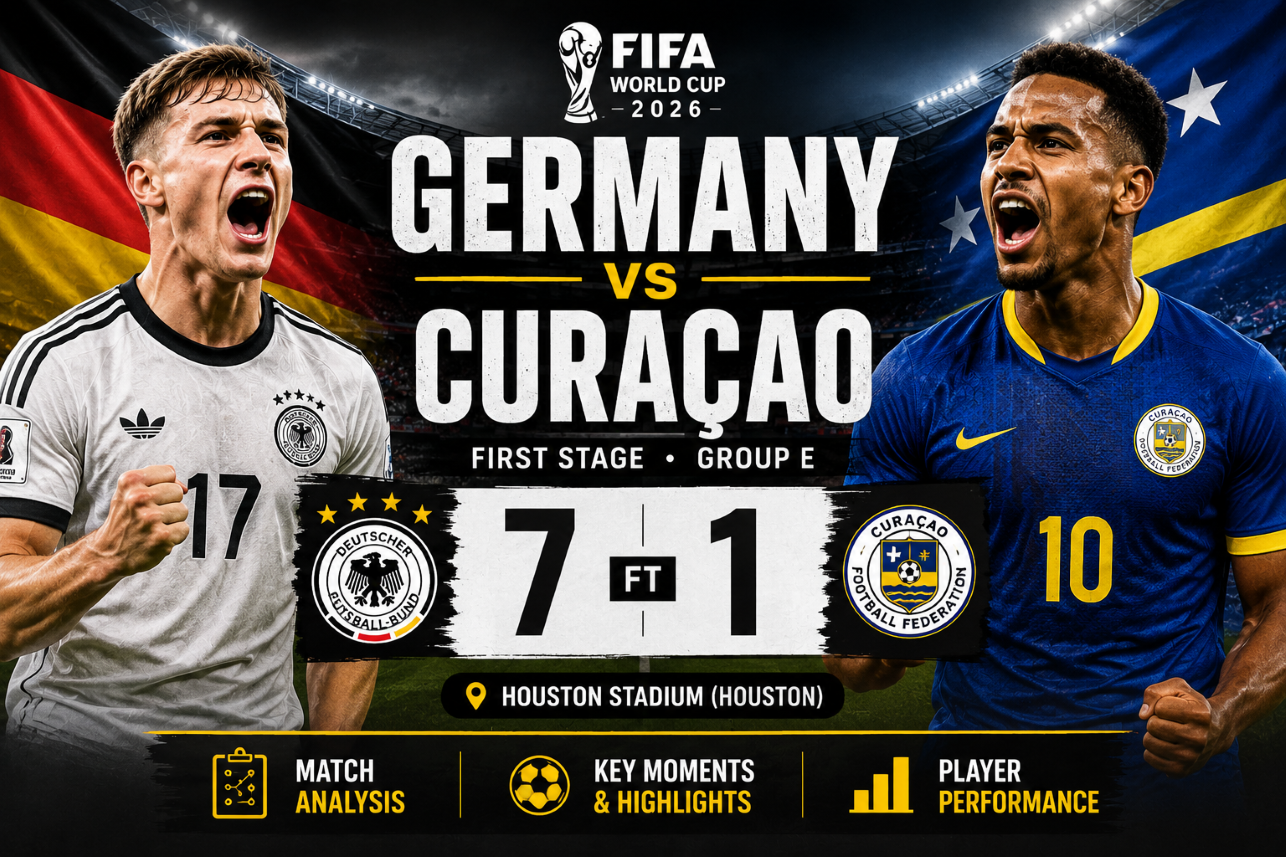
  • Germany 7-1 Curaçao: Dominant German Performance in FIFA World Cup 2026 Group E Clash

    Germany 7-1 Curaçao: Dominant German Performance in FIFA World Cup 2026 Group E Clash

    Germany 7-1 Curaçao: A Statement Victory in Group E

    Germany delivered a commanding performance in their FIFA World Cup 2026 Group E encounter, defeating Curaçao 7-1 at Houston Stadium in Houston. The German side showcased their attacking quality, clinical finishing, and tactical discipline to secure one of the most emphatic victories of the group stage.

    From the opening whistle, Germany controlled possession and dictated the tempo of the match. Their relentless attacking pressure proved too much for Curaçao, who struggled to contain Germany’s fluid movement and creative play throughout the contest.

    Germany Take Early Control

    Germany started the match with intensity and purpose, pressing high and creating opportunities in dangerous areas. Their quick passing combinations and intelligent movement stretched the Curaçao defense, allowing the Germans to establish an early lead.

    The opening goal settled Germany’s nerves and provided the foundation for a dominant display. As confidence grew, the team continued to push forward, creating numerous scoring opportunities and maintaining complete control of possession.

    Attacking Excellence on Display

    Germany’s attacking players delivered a masterclass in finishing and creativity. The team’s ability to transition quickly from defense to attack repeatedly exposed gaps in Curaçao’s defensive structure.

    • Clinical finishing in front of goal.
    • Effective movement in the final third.
    • Strong midfield control and creativity.
    • High pressing that forced defensive errors.
    • Excellent teamwork and attacking combinations.

    Each attacking move appeared dangerous as Germany consistently found ways to break through Curaçao’s defensive lines.

    Curaçao Show Character Despite Defeat

    Although overwhelmed for much of the match, Curaçao showed resilience and determination. The team continued to compete and was rewarded with a goal that provided a memorable moment for their supporters.

    Facing one of the strongest teams in the tournament is always a difficult challenge, and Curaçao will look to learn valuable lessons from this experience as they prepare for upcoming fixtures.

    Midfield Dominance and Tactical Discipline

    Germany’s midfield played a crucial role in the victory. By controlling possession and dictating the pace of the game, they ensured that Curaçao had limited opportunities to build sustained attacks.

    The German players demonstrated exceptional tactical awareness, maintaining their shape while supporting both defensive and attacking phases effectively throughout the match.

    “Germany’s 7-1 victory highlighted their attacking strength and reinforced their status as one of the tournament’s strongest contenders.”

    Key Takeaways from the Match

    • Germany showcased world-class attacking quality.
    • The team demonstrated excellent tactical organization.
    • Multiple players contributed to the scoring success.
    • Curaçao showed determination despite the challenging result.
    • Germany strengthened their position in Group E.

    Impact on Group E Standings

    This convincing victory provides Germany with a significant boost in both points and goal difference. In major international tournaments, goal difference can become a crucial factor, making the seven-goal performance particularly valuable.

    The result also sends a strong message to Germany’s future opponents, demonstrating the team’s ability to dominate matches and capitalize on scoring opportunities.

    Looking Ahead

    Germany will carry considerable momentum into their next Group E fixture after such a commanding display. The team’s balance between defensive stability and attacking firepower suggests they could be serious contenders as the tournament progresses.

    Meanwhile, Curaçao will focus on regrouping, analyzing the lessons from this encounter, and preparing to respond positively in their remaining group-stage matches.

    Conclusion

    Germany’s 7-1 victory over Curaçao at Houston Stadium was one of the standout performances of the FIFA World Cup 2026 group stage. Combining attacking brilliance, tactical discipline, and relentless pressure, Germany delivered a complete team performance that strengthened their ambitions for a deep tournament run. For Curaçao, despite the difficult result, the experience gained against elite opposition will remain valuable as they continue their World Cup journey.

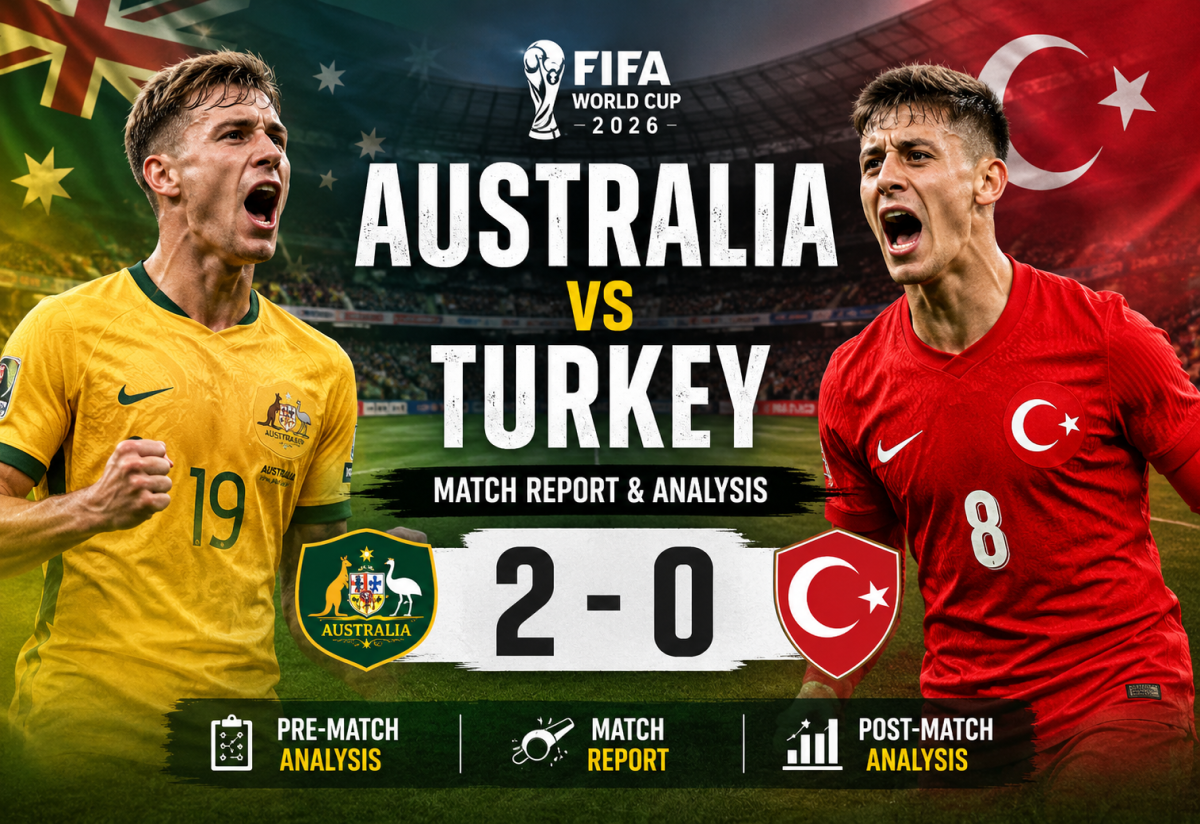
  • Australia vs Turkey: FIFA World Cup 2026 – Pre-Match, Match Report & Post-Match Analysis

    Australia vs Turkey: FIFA World Cup 2026 – Pre-Match, Match Report & Post-Match Analysis

    Australia produced one of the biggest surprises of the opening round of the FIFA World Cup 2026, defeating Turkey 2-0 in Vancouver. While Turkey entered the match with higher expectations and a technically gifted squad, Australia’s tactical discipline, defensive resilience, and clinical finishing secured a memorable victory.

    Pre-Match Analysis

    Match Preview

    Turkey arrived at the World Cup as one of Europe’s most exciting emerging teams. Led by captain Hakan Çalhanoğlu and featuring young stars such as Arda Güler, the Turks were expected to control possession and dictate play.

    Australia, meanwhile, entered the tournament as underdogs. Coach Tony Popovic surprised many observers with a youthful starting lineup, including goalkeeper Patrick Beach making his World Cup debut. Questions surrounded whether the young Socceroos could handle Turkey’s technical quality and attacking creativity.

    Key Pre-Match Talking Points

    • Turkey were returning to the World Cup after a 24-year absence.
    • Australia fielded one of the youngest squads in the tournament.
    • Arda Güler was viewed as Turkey’s main creative threat.
    • Australia’s strategy was expected to rely on defensive organization and counterattacks.

    Predicted Outcome

    Most analysts expected Turkey to dominate possession and create the majority of chances. Australia were viewed as capable of frustrating their opponents but not necessarily winning the contest.

    Prediction:
    Turkey 2-1 Australia

    Match Report

    First Half

    Turkey began confidently, controlling possession and pushing Australia deep into their own half. However, the Socceroos remained compact and disciplined defensively.

    Against the run of play, Australia struck in the 27th minute. Young winger Nestory Irankunda used his pace brilliantly before finishing clinically to give Australia a shock lead. The goal energized the Australians and forced Turkey to chase the game.

    Patrick Beach was called into action several times before halftime, producing important saves to preserve Australia’s advantage.

    Half-Time Score: Australia 1-0 Turkey

    Second Half

    Turkey increased the pressure after the break and continued to dominate possession. Arda Güler created several dangerous moments, while Hakan Çalhanoğlu attempted to orchestrate attacks from midfield.

    Despite the pressure, Australia’s defensive structure remained solid. Harry Souttar marshaled the back line effectively, while Beach continued his impressive performance in goal.

    The decisive moment arrived in the 75th minute when Connor Metcalfe surged forward and finished brilliantly to double Australia’s lead.

    Turkey continued attacking but could not find a breakthrough as Australia completed a professional and disciplined performance.

    Full-Time Score

    Australia 2-0 Turkey

    Goals:

    • Nestory Irankunda (27′)
    • Connor Metcalfe (75′)

    Post-Match Analysis

    Why Australia Won

    1. Tactical Discipline

    Australia executed their game plan perfectly. They remained compact, denied space in central areas, and forced Turkey into less dangerous attacking positions. Their defensive organization frustrated Turkey throughout the match.

    2. Outstanding Goalkeeping

    Patrick Beach delivered one of the best goalkeeping performances of the tournament so far. His saves kept Turkey scoreless and gave Australia confidence throughout the game.

    3. Clinical Finishing

    While Turkey controlled large portions of possession, Australia were ruthless when opportunities appeared. Irankunda and Metcalfe converted their chances efficiently.

    Why Turkey Lost

    1. Lack of Penetration

    Turkey enjoyed significant possession but struggled to break down Australia’s defensive block. Much of their play ended in hopeful crosses that were comfortably dealt with by Australia’s tall defenders.

    2. Tactical Frustration

    Several observers criticized Turkey’s substitutions and attacking structure. Despite dominating the ball, they failed to create enough high-quality chances.

    3. Defensive Vulnerability

    Australia’s counterattacks exposed Turkey’s defensive shape on multiple occasions, leading directly to both goals.

    Player Ratings

    Australia

    • Patrick Beach – 9/10
    • Harry Souttar – 8/10
    • Nestory Irankunda – 9/10
    • Connor Metcalfe – 8.5/10
    • Paul Okon – 8/10

    Turkey

    • Arda Güler – 7.5/10
    • Hakan Çalhanoğlu – 6.5/10
    • Kerem Aktürkoğlu – 6/10
    • Merih Demiral – 5.5/10

    Based on overall influence, Beach and Irankunda were the standout performers for Australia, while Arda Güler was Turkey’s brightest player.


    What This Means for Group D

    Australia’s victory places them in an excellent position heading into their next match against the United States. Turkey now face significant pressure and will likely need a positive result against Paraguay to keep qualification hopes alive.

    Final Verdict

    Australia’s 2-0 victory over Turkey was a classic World Cup upset. The Socceroos combined tactical discipline, defensive resilience, and clinical finishing to earn a famous win. While Turkey controlled possession and territory, Australia demonstrated that organization and efficiency can still triumph on football’s biggest stage.

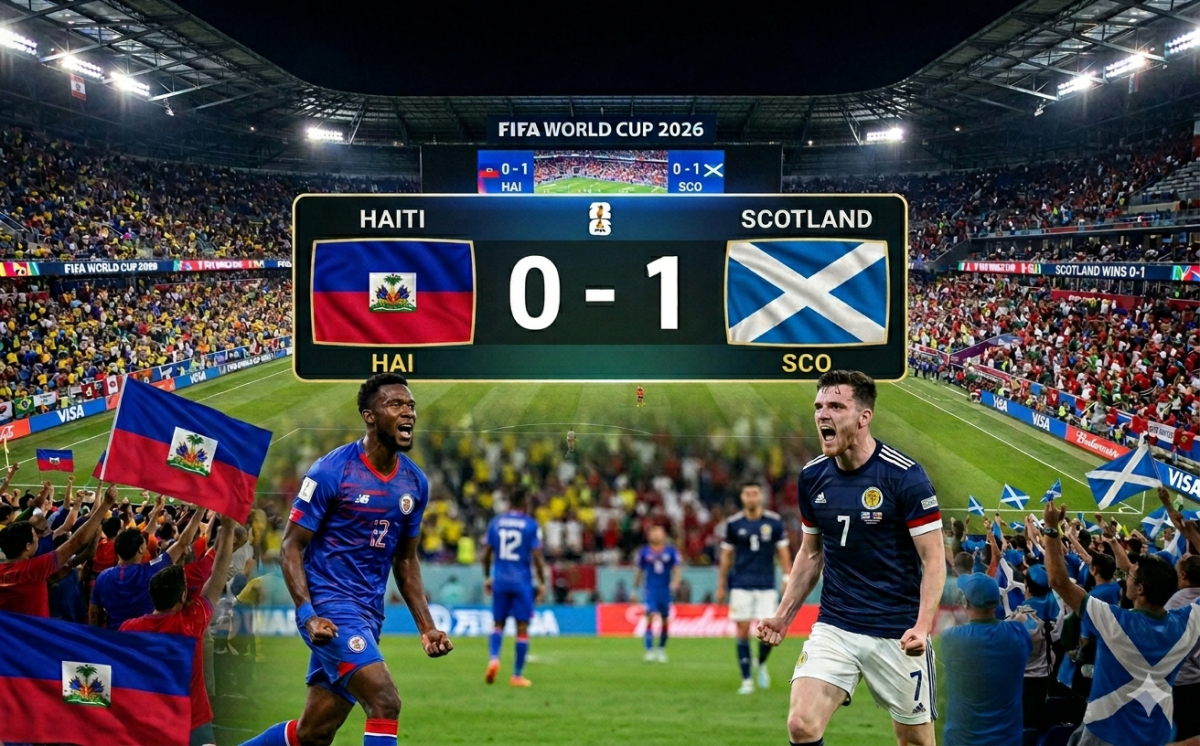
  • Haiti vs Scotland 2026 World Cup Analysis – Pre Match, Tactical Breakdown & Post Match Review

    Haiti vs Scotland 2026 World Cup Analysis – Pre Match, Tactical Breakdown & Post Match Review

    Pre-Match Analysis: Haiti vs Scotland

    The Group C clash between Haiti and Scotland in the FIFA World Cup 2026 was seen as a crucial fixture for both sides. Scotland entered the match with a structured European tactical identity, while Haiti relied on speed, unpredictability, and counter-attacking transitions.

    Scotland’s game plan focused on possession control, disciplined midfield structure, and set-piece efficiency. Haiti, meanwhile, looked to exploit defensive gaps using fast breaks and direct attacking play.

    • Scotland strength: Tactical discipline and set-piece threat
    • Haiti strength: Speed and counter-attacking transitions
    • Key battle: Scotland midfield control vs Haiti counter pace

    Analysts expected Scotland to dominate possession, while Haiti aimed to stay compact and strike on the break.

    Match Summary & Key Moments

    Scotland secured a narrow 1–0 victory in a tightly contested match, where defensive discipline played a decisive role.

    The first half was balanced, with Haiti showing strong defensive organization and occasional counter-attacks that troubled Scotland’s backline.

    Scotland eventually broke through with a well-constructed team move, capitalizing on sustained pressure and midfield dominance.

    Haiti pushed for an equalizer in the final stages, but Scotland’s defensive structure held firm under pressure.

    Tactical Analysis

    Scotland deployed a balanced 4-3-3 system focusing on midfield control and wide progression. Their ability to recycle possession helped them maintain territorial advantage.

    Haiti operated in a compact low-block system, prioritizing defensive stability and quick counter-attacks through the wings.

    • Scotland dominated possession and territory
    • Haiti created limited but dangerous counter opportunities
    • Set pieces played a key role in Scotland’s attacking threat

    Standout Performers

    Scotland’s midfield controlled the tempo of the game, while their defensive line remained composed under pressure. Haiti’s goalkeeper and defenders were crucial in preventing a wider scoreline.

    • Scotland: Midfield control, defensive stability
    • Haiti: Goalkeeper resilience, counter-attacking speed

    Post-Match Insights

    The 1–0 result reflects Scotland’s efficiency rather than dominance. While they controlled most phases of play, they struggled to convert chances into goals.

    Haiti showed strong defensive organization but lacked finishing quality in attacking transitions. The result keeps Scotland in a stronger position within Group C.

    • Scotland concern: Finishing efficiency
    • Haiti strength: Defensive resilience and structure
    • Group impact: Scotland improves qualification chances
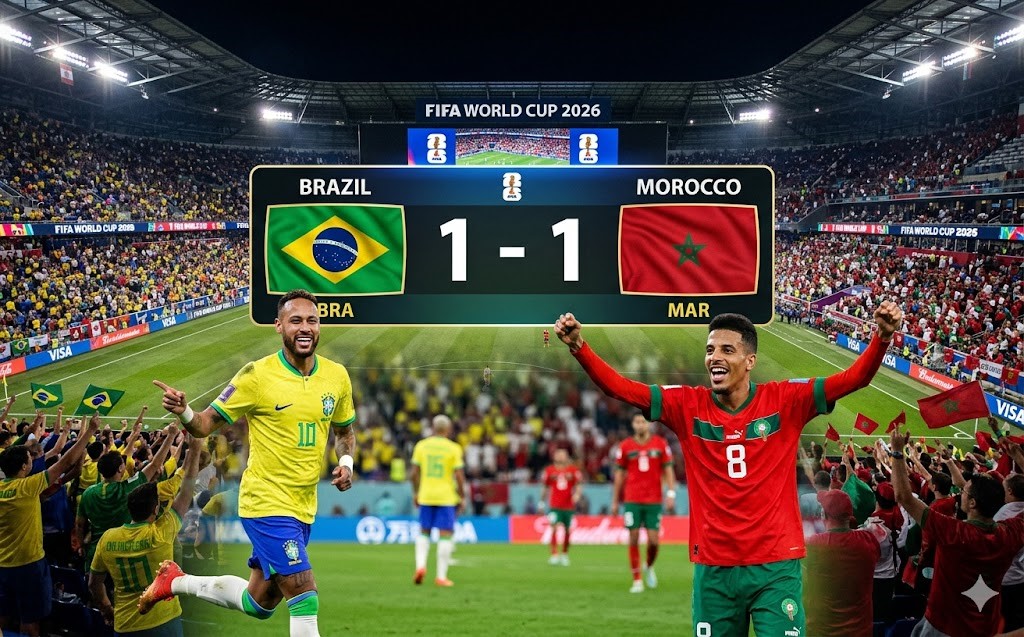
  • Brazil vs Morocco 1–1 Analysis (World Cup 2026) – Pre Match, Tactical Review & Post Match Breakdown

    Brazil vs Morocco 1–1 Analysis (World Cup 2026) – Pre Match, Tactical Review & Post Match Breakdown

    Pre-Match Analysis: Brazil vs Morocco

    The FIFA World Cup 2026 Group C clash between Brazil and Morocco was one of the most anticipated fixtures of the group stage. Brazil entered as five-time world champions, while Morocco arrived with strong momentum after their historic semi-final run in 2022.

    Brazil, under a new tactical setup, relied heavily on attacking flair from Vinícius Jr., Raphinha, and Paquetá. However, the absence of Neymar left a noticeable creative gap in midfield.

    Morocco, on the other hand, came with a disciplined and structured approach, combining high pressing with quick transitions led by Achraf Hakimi and Brahim Díaz.

    • Brazil strength: Individual brilliance and attacking depth
    • Morocco strength: Defensive structure and counter-attacks
    • Key battle: Brazil attack vs Morocco pressing system

    Match Overview & Key Moments

    The match ended in a thrilling 1–1 draw, with both teams showcasing their strengths in different phases of the game.

    Morocco started strongly, pressing high and forcing Brazil into early defensive errors. Their pressure paid off with an early goal, putting Brazil under immediate pressure.

    Brazil responded through Vinícius Jr., who produced a moment of individual brilliance to level the score before halftime.

    The second half saw Brazil improve in possession, but Morocco remained dangerous on counter-attacks, keeping the match evenly balanced until the final whistle.

    Tactical Analysis

    Brazil operated in a fluid attacking shape (4-2-3-1), focusing on wide overloads and quick transitions through Vinícius Jr. and Raphinha. However, their midfield struggled to maintain consistent control.

    Morocco executed a compact defensive system, often shifting into a mid-block to absorb pressure before launching rapid counter-attacks through the flanks.

    • Brazil dominated possession but lacked final-third efficiency
    • Morocco created higher-quality chances on counter-attacks
    • Midfield battle remained evenly contested

    Standout Performers

    Vinícius Jr. was Brazil’s standout performer, constantly driving attacks and scoring the equalizer. Morocco’s midfield and defensive unit displayed excellent coordination under pressure.

    • Brazil: Vinícius Jr., Raphinha, Marquinhos
    • Morocco: Achraf Hakimi, Brahim Díaz, Yassine Bounou

    Post-Match Insights

    The 1–1 result highlights both Brazil’s attacking potential and their structural weaknesses in midfield control. Despite their dominance in possession, Brazil struggled to break down Morocco’s disciplined defensive shape.

    Morocco will take great confidence from this result, proving once again that they can compete against elite footballing nations with tactical discipline and resilience.

    • Brazil concern: Over-reliance on individual brilliance
    • Morocco strength: Tactical discipline and counter-attacking efficiency
    • Group impact: Tight race for qualification from Group C
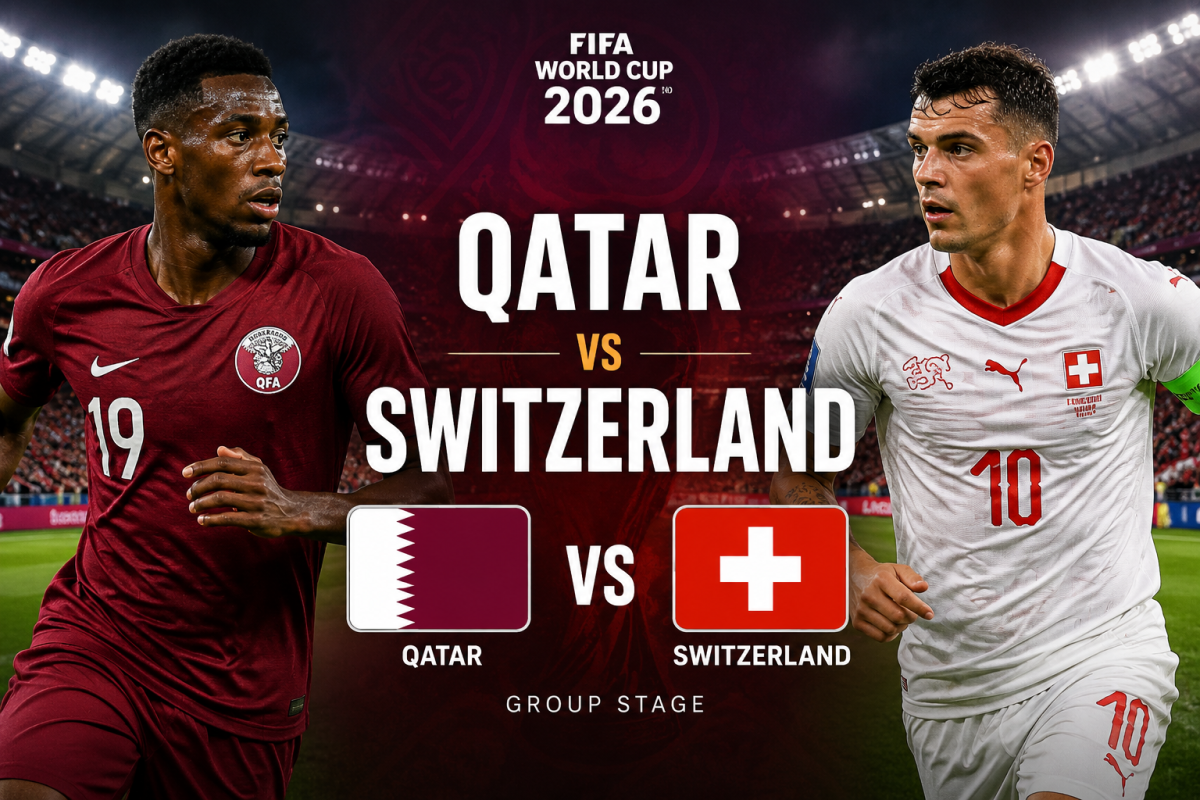
  • Qatar vs Switzerland Match Analysis (World Cup 2026) – Pre Match, Live Insights & Post Match Review

    Qatar vs Switzerland Match Analysis (World Cup 2026) – Pre Match, Live Insights & Post Match Review

    The Group B encounter between Qatar and Switzerland in the FIFA World Cup 2026 carried high tactical importance. Both teams entered the match with contrasting styles—Qatar relying on compact defensive structure and quick transitions, while Switzerland focused on disciplined possession and structured attacking buildup.

    Qatar aimed to exploit counterattacks through pace on the wings, while Switzerland depended heavily on midfield control and ball retention to break down defensive lines.

    • Qatar’s strength: Defensive compactness and counterattacks
    • Switzerland’s strength: Midfield dominance and structured pressing
    • Key battle: Midfield control vs defensive resilience

    Before kickoff, analysts expected Switzerland to dominate possession, but Qatar was considered dangerous on quick transitions.

    Match Summary & Key Moments

    The match ended in a tightly contested 1–1 draw, reflecting the balanced nature of both teams’ performances.

    Switzerland started strongly with controlled possession, but Qatar’s defensive discipline kept them in the game. Both teams exchanged momentum throughout the 90 minutes.

    Qatar surprised Switzerland with sharp counterattacks, while Switzerland responded with structured attacking plays through midfield rotations.

    Tactical Analysis

    Switzerland maintained a classic 4-3-3 formation focusing on width and midfield triangles. Their buildup relied heavily on quick passing between midfielders to break Qatar’s low block.

    Qatar used a compact defensive shape, often shifting into a 4-5-1 during defensive phases, forcing Switzerland to attempt long-range shots and crosses.

    • Switzerland dominated possession (~60%)
    • Qatar had fewer chances but higher counterattack efficiency
    • Midfield duels decided the tempo of the match

    Standout Performers

    For Switzerland, the midfield engine controlled the tempo, constantly feeding attacking lanes. Qatar’s goalkeeper and defensive line played a crucial role in maintaining the draw.

    • Qatar: Defensive unit and goalkeeper resilience
    • Switzerland: Midfield creators and wide attackers

    Post-Match Insights

    The 1–1 result reflects a fair outcome based on the balance of play. Switzerland will likely feel they missed opportunities to secure all three points, while Qatar will be satisfied with a disciplined and organized performance.

    This result keeps Group B tightly contested, making upcoming fixtures critical for qualification chances.

    • Switzerland: Needs better finishing efficiency
    • Qatar: Strong defensive foundation proven effective
    • Group impact: Open qualification race
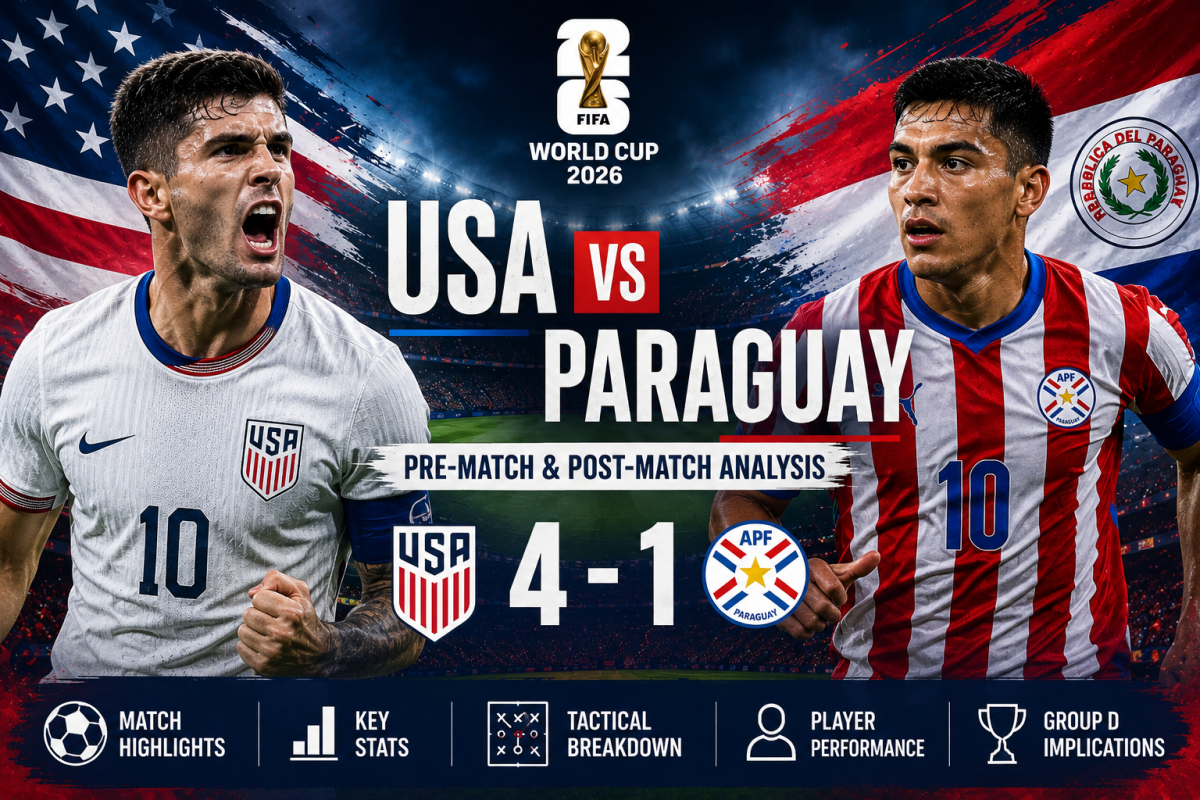
  • USA vs Paraguay – FIFA World Cup 2026: Pre-Match & Post-Match Analysis

    USA vs Paraguay – FIFA World Cup 2026: Pre-Match & Post-Match Analysis

    The United States launched their FIFA World Cup 2026 campaign in emphatic fashion with a commanding 4-1 victory over Paraguay in Group D. Playing on home soil and backed by a passionate crowd, the Americans delivered an attacking masterclass that immediately established them as one of the tournament’s early contenders.

    Pre-Match Analysis

    The United States entered the tournament carrying high expectations. With a talented squad featuring players competing in Europe’s top leagues, the Americans were expected to combine technical quality with athletic intensity. Head coach Mauricio Pochettino emphasized aggressive pressing, quick transitions, and attacking football.

    Paraguay arrived as a dangerous underdog. Known for defensive resilience and physical play, La Albirroja hoped to frustrate the hosts and capitalize on counterattacking opportunities. Their objective was simple: remain compact, absorb pressure, and punish mistakes.

    Key Pre-Match Factors

    • USA enjoyed home-field advantage and overwhelming crowd support.
    • The Americans possessed greater attacking depth.
    • Paraguay’s defensive organization would be tested throughout the match.
    • Winning the opening game was crucial for qualification hopes.
    • Midfield control was expected to determine the tempo of the match.

    Pre-Match Prediction: USA 3-1 Paraguay.

    Match Summary

    The United States delivered a dominant performance, defeating Paraguay 4-1 in one of the most impressive displays of the opening round. The Americans controlled possession, created numerous scoring opportunities, and consistently exposed gaps in Paraguay’s defense. Paraguay managed to score once but struggled to contain the relentless American attack.

    Post-Match Analysis

    What USA Did Well

    • Pressed aggressively from the opening whistle.
    • Maintained excellent attacking movement and fluidity.
    • Created chances from multiple areas of the pitch.
    • Displayed confidence and composure in front of goal.
    • Controlled possession and dictated the pace of the match.

    Areas USA Must Improve

    • Occasional defensive lapses allowed Paraguay scoring opportunities.
    • Need better concentration during defensive transitions.
    • Must maintain consistency against stronger opponents.
    • Could improve efficiency in converting clear-cut chances.

    Paraguay’s Performance

    • Showed determination despite facing intense pressure.
    • Created a few dangerous counterattacks.
    • Struggled to maintain possession for long periods.
    • Defensive structure broke down under sustained attacks.
    • Will need a stronger response in upcoming matches.

    Tactical Breakdown

    The United States utilized a high-pressing system that forced Paraguay into repeated mistakes. Quick ball recovery in midfield allowed the Americans to launch attacks before Paraguay could reorganize defensively. Paraguay attempted to sit deep and counter, but the USA’s speed and movement consistently stretched their defensive lines.

    Player of the Match

    The standout performer was the American attacking unit, which combined creativity, pace, and clinical finishing to overwhelm Paraguay’s defense. Their collective performance showcased why the USA is considered a serious contender in Group D.

    Impact on Group D

    The 4-1 victory gives the United States an early advantage in Group D and significantly boosts their goal difference. Australia and Turkey now face increased pressure to keep pace with the group leaders. Paraguay, meanwhile, must quickly regroup before their crucial next match against Turkey.

    Looking Ahead

    The United States will next face Australia in what could be a decisive match for first place in Group D. Paraguay’s clash against Turkey has effectively become a must-win encounter if they hope to remain in contention for a place in the knockout rounds.

    Final Verdict

    The USA could hardly have asked for a better start to their FIFA World Cup 2026 campaign. A 4-1 victory demonstrated attacking quality, tactical maturity, and the ability to perform under pressure. Paraguay showed moments of promise but were ultimately overwhelmed by an American side that announced itself as a serious force in the tournament.

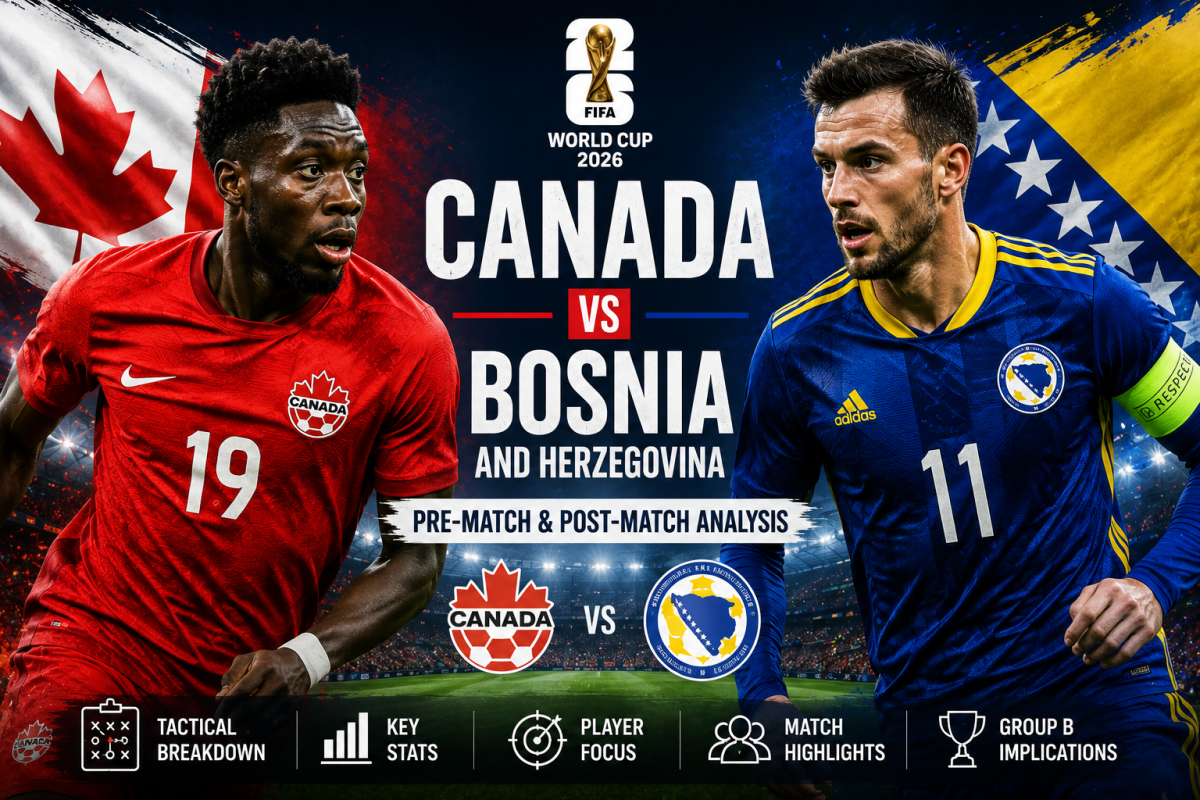
  • Canada vs Bosnia and Herzegovina – FIFA World Cup 2026: Pre-Match & Post-Match Analysis

    Canada vs Bosnia and Herzegovina – FIFA World Cup 2026: Pre-Match & Post-Match Analysis

    The FIFA World Cup 2026 continued with an intriguing Group B clash between co-hosts Canada and Bosnia and Herzegovina. Playing in front of enthusiastic home supporters, Canada aimed to secure an important victory to strengthen their qualification hopes, while Bosnia and Herzegovina sought to prove they could compete against one of the tournament hosts. The match ultimately ended in a hard-fought 1-1 draw, leaving both teams with valuable but potentially frustrating points.

    Pre-Match Analysis

    Canada entered the tournament with growing confidence after impressive performances in recent international competitions. Led by a talented generation of players, the Canadians were expected to use their pace, pressing intensity, and home support to dictate the match.

    Bosnia and Herzegovina arrived as a disciplined and experienced side capable of frustrating opponents through tactical organization and physical play. Their objective was clear: remain compact defensively and capitalize on counterattacking opportunities.

    Key Pre-Match Factors

    • Canada benefited from home support and familiarity with conditions.
    • Bosnia possessed significant experience in defensive organization.
    • Midfield battles were expected to decide possession and momentum.
    • Both teams viewed the opening match as crucial for qualification hopes.
    • Early points in Group B could prove decisive later in the tournament.

    Pre-Match Prediction: Canada 2-1 Bosnia and Herzegovina.

    Match Summary

    Canada and Bosnia and Herzegovina shared the points after a competitive 1-1 draw. Canada controlled large portions of possession and created several promising opportunities, but Bosnia remained disciplined and efficient whenever chances arose. Both sides found the back of the net, resulting in a balanced outcome that reflected the overall flow of the match.

    Post-Match Analysis

    What Canada Did Well

    • Controlled possession for extended periods.
    • Applied effective pressure high up the pitch.
    • Created numerous scoring opportunities.
    • Displayed strong energy and work rate throughout the match.
    • Responded positively after conceding pressure periods.

    Areas Canada Must Improve

    • Finishing in front of goal lacked consistency.
    • Several promising attacks failed to produce clear chances.
    • Defensive transitions occasionally left gaps.
    • Need greater composure in crucial moments.

    Bosnia and Herzegovina’s Performance

    • Maintained excellent defensive shape.
    • Successfully absorbed periods of Canadian pressure.
    • Made efficient use of counterattacking opportunities.
    • Displayed resilience and tactical discipline.
    • Earned a valuable point against one of the tournament hosts.

    Tactical Battle

    The contest showcased a classic contrast in styles. Canada attempted to dominate possession and push forward through quick passing combinations, while Bosnia and Herzegovina focused on defensive compactness and rapid transitions. Neither side managed to gain complete control, resulting in an evenly balanced encounter.

    Player of the Match

    Canada’s midfield engine stood out by controlling the tempo of the game and driving attacks forward, while Bosnia’s defensive unit collectively delivered an outstanding performance under sustained pressure.

    Impact on Group B

    The draw leaves Group B wide open. Both teams collected a valuable point but will feel they missed an opportunity to gain an early advantage. With Switzerland and Qatar also competing in the group, every point could become crucial in determining qualification for the knockout stages.

    Final Verdict

    Canada may be slightly disappointed not to convert home advantage into three points, while Bosnia and Herzegovina will be pleased with their disciplined display and deserved draw. The result keeps both teams firmly in the race for qualification and sets up an exciting battle in Group B as the tournament progresses.

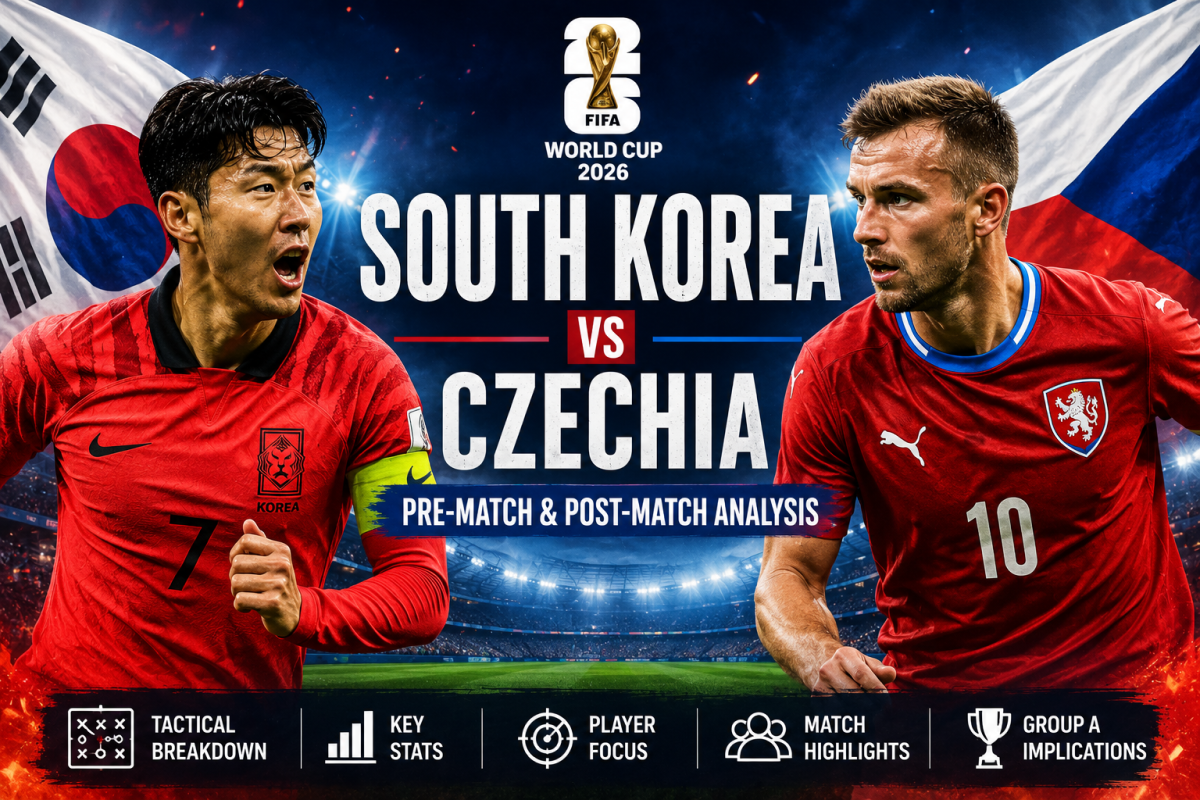
  • South Korea vs Czechia – FIFA World Cup 2026: Pre-Match & Post-Match Analysis

    South Korea vs Czechia – FIFA World Cup 2026: Pre-Match & Post-Match Analysis

    Group A action at the FIFA World Cup 2026 continued with an intriguing clash between South Korea and Czechia. Both nations entered the tournament aiming to secure an early advantage in a highly competitive group featuring Mexico and South Africa. The encounter promised a fascinating tactical battle between South Korea’s pace and technical ability and Czechia’s physical presence and organized defensive structure.

    Pre-Match Analysis

    South Korea arrived with confidence after several strong performances during qualification and preparation matches. Led by a talented squad featuring a blend of European-based stars and emerging domestic talent, the Taeguk Warriors were expected to play an aggressive, possession-oriented style with quick transitions.

    Czechia entered the match determined to prove they could compete with the best teams in the tournament. Known for their disciplined defensive organization and dangerous set-piece ability, they aimed to frustrate South Korea and capitalize on counter-attacking opportunities.

    Key Pre-Match Factors

    • South Korea possessed greater attacking speed and creativity.
    • Czechia relied heavily on defensive organization and aerial strength.
    • The match carried significant importance in the battle for Group A qualification.
    • Both teams sought to avoid an opening-match defeat.
    • Midfield control was expected to determine the outcome.

    Pre-Match Prediction: South Korea 2-1 Czechia.

    Match Summary

    South Korea secured a valuable 2-1 victory over Czechia in a competitive Group A encounter. The Koreans demonstrated resilience and attacking efficiency, converting key opportunities while maintaining composure under pressure. Czechia fought hard throughout the contest and managed to stay within reach, but South Korea’s quality in decisive moments ultimately proved the difference.

    Post-Match Analysis

    What South Korea Did Well

    • Created dangerous attacking movements through the wings.
    • Maintained strong possession during key phases of the game.
    • Showed composure when protecting their lead.
    • Pressed effectively to disrupt Czechia’s build-up play.
    • Displayed tactical flexibility when under pressure.

    Areas South Korea Must Improve

    • Defensive concentration dipped at times.
    • Allowed Czechia several opportunities from set pieces.
    • Need greater efficiency when converting scoring chances.
    • Must maintain consistency for the full ninety minutes.

    Czechia’s Performance

    • Demonstrated strong defensive discipline.
    • Remained competitive despite trailing.
    • Created danger from crosses and dead-ball situations.
    • Showed determination and fighting spirit throughout the match.
    • Will need to improve attacking creativity in future fixtures.

    Turning Point

    The decisive moment came when South Korea capitalized on a defensive lapse to score the winning goal. From that point onward, Czechia chased the game but struggled to break down a disciplined Korean defense.

    Impact on Group A

    The victory places South Korea in a strong position alongside Mexico after the opening round of matches. The three points significantly enhance their qualification prospects heading into the crucial showdown against Mexico. Czechia, meanwhile, face increased pressure to secure positive results against South Africa and Mexico in their remaining group fixtures.

    Final Verdict

    South Korea earned a deserved 2-1 victory through superior attacking quality and tactical discipline. Czechia delivered a spirited performance and remained competitive throughout, but South Korea’s ability to seize critical moments made the difference. With both Mexico and South Korea opening their campaigns with victories, Group A is shaping up to be one of the most competitive groups of FIFA World Cup 2026.

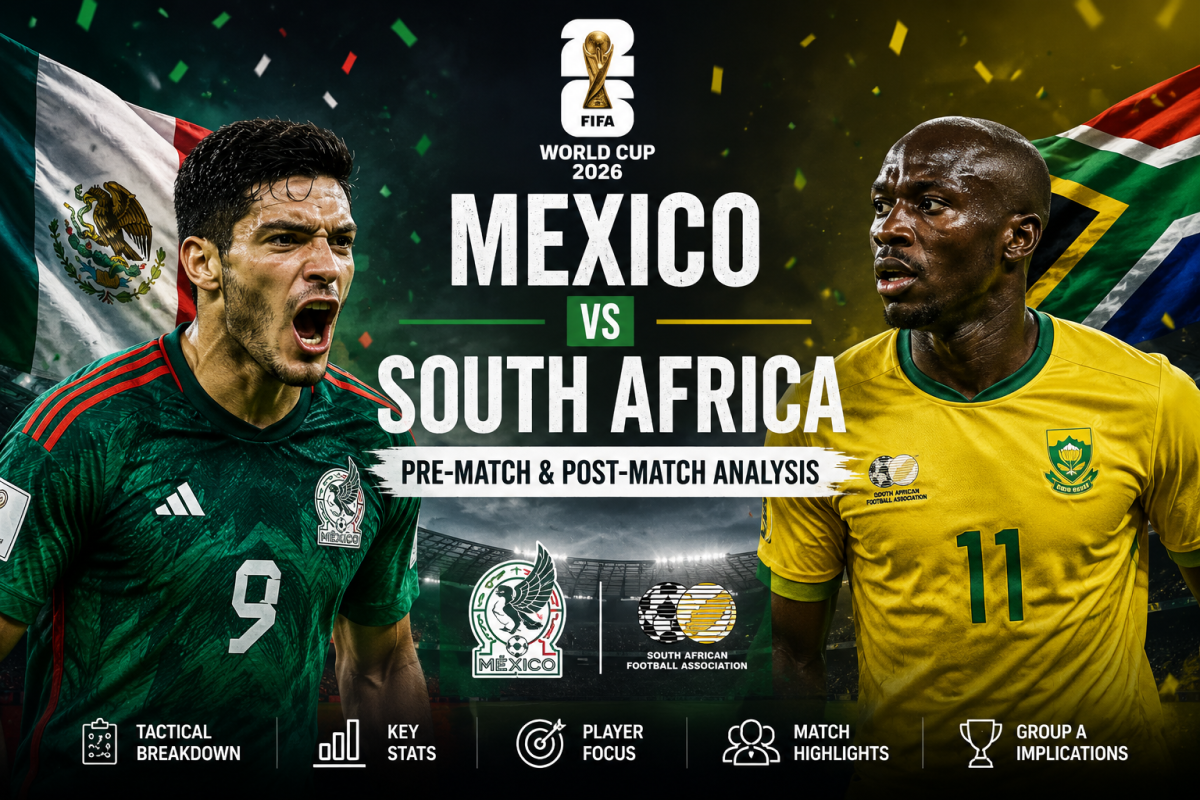
  • Mexico vs South Africa – FIFA World Cup 2026: Pre-Match & Post-Match Analysis

    Mexico vs South Africa – FIFA World Cup 2026: Pre-Match & Post-Match Analysis

    The FIFA World Cup 2026 kicked off with an exciting Group A encounter between hosts Mexico and South Africa at the iconic Estadio Azteca in Mexico City. The opening match carried tremendous expectations as Mexico sought to capitalize on home advantage while South Africa hoped to recreate the fighting spirit they showed when hosting the 2010 World Cup.

    Pre-Match Analysis

    Mexico entered the tournament as strong favorites. Playing in front of a passionate home crowd and boasting experienced players such as Raul Jimenez and Julian Quinones, El Tri were expected to dominate possession and create numerous scoring opportunities.

    South Africa, meanwhile, arrived as underdogs. Their strategy was likely to focus on defensive organization, quick transitions, and exploiting any nerves from the hosts. Despite being considered outsiders in Group A, Bafana Bafana hoped to frustrate Mexico and steal valuable points.

    Key Pre-Match Factors

    • Mexico had home-field advantage and strong crowd support.
    • Julian Quinones was viewed as Mexico’s most dangerous attacking threat.
    • South Africa needed defensive discipline to stay competitive.
    • The opening match pressure could influence both teams.
    • Three points would provide a major boost toward qualification from Group A.

    Prediction before kickoff: Mexico 2-0 South Africa.

    Match Summary

    Mexico delivered a professional performance and secured a 2-0 victory over South Africa in the opening match of the tournament. Julian Quinones opened the scoring early before Raul Jimenez added a second goal later in the match. The contest became increasingly difficult for South Africa after disciplinary issues resulted in two red cards, reducing them to nine men for the closing stages. Mexico also finished with ten men after Cesar Montes received a late red card. Mexico’s victory marked the nation’s first-ever win in a World Cup opening match.

    Post-Match Analysis

    What Mexico Did Well

    • Pressed aggressively from the opening minutes.
    • Controlled possession and dictated the tempo.
    • Created more quality chances than South Africa.
    • Successfully utilized the energy of the home crowd.
    • Maintained defensive stability throughout the match.

    Areas Mexico Must Improve

    • Missed several scoring opportunities that could have increased the margin of victory.
    • Need greater efficiency in the final third.
    • The late red card to Cesar Montes creates selection challenges for the next match.
    • Must avoid unnecessary disciplinary issues against stronger opponents.

    South Africa’s Performance

    • Showed determination during the opening stages.
    • Struggled to retain possession under Mexico’s pressure.
    • Created very few clear scoring opportunities.
    • Disciplinary problems significantly affected their chances.
    • Need a stronger attacking response in upcoming Group A fixtures.

    Player of the Match

    Julian Quinones was the standout performer, scoring the first goal of FIFA World Cup 2026 and constantly troubling the South African defense with his movement and finishing ability.

    What This Means for Group A

    Mexico’s victory places them in a strong early position in Group A and gives them momentum heading into their next match against South Korea. South Africa now faces increased pressure in their remaining fixtures and will likely need positive results against Czechia and South Korea to keep qualification hopes alive.

    Final Verdict

    Mexico delivered exactly what their supporters expected: a winning start on home soil. While the 2-0 scoreline reflected their superiority, there remains room for improvement before facing tougher opposition. South Africa showed flashes of resilience but ultimately lacked the discipline and quality needed to challenge the hosts. As opening matches go, Mexico could hardly have asked for a better beginning to their FIFA World Cup 2026 campaign.