Ruud Gullit Urges FIFA Leadership Change Amid Growing World Cup Controversy
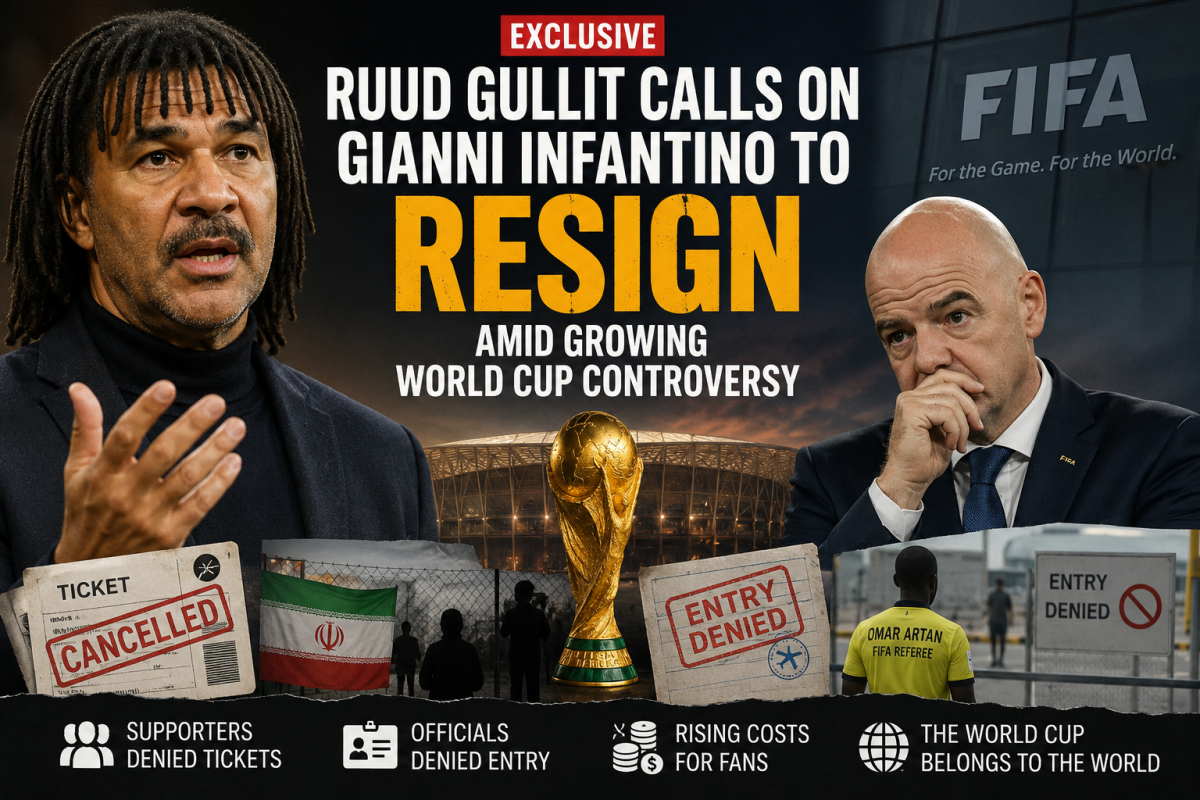
Former Dutch football star Ruud Gullit has publicly called on Gianni Infantino to consider stepping down as concerns mount over the ongoing preparations and management of the upcoming FIFA World Cup.
The comments come at a time when scrutiny over governance, accessibility, and political tensions surrounding the tournament is intensifying, raising broader questions about the direction of global football under FIFA’s leadership.
“Football is no longer the main story”
Gullit, a former Ballon d’Or winner and one of football’s most respected voices, explained that he had remained silent for a long time in order to judge developments purely on sporting grounds. However, he says the situation has shifted.
According to Gullit, the deeper the tournament preparations progress, the more football itself appears to be overshadowed by external issues.
He argues that a World Cup, which is meant to represent unity through sport, is instead becoming associated with division, political disputes, travel restrictions, and administrative complications.
Concerns over access for fans and officials
Among the most serious issues raised are reports suggesting that certain groups of supporters and officials may be facing barriers unrelated to football performance or merit.
Gullit pointed to claims that some Iranian supporters had their ticket allocations withdrawn. He also referenced reports involving Somali referee Omar Artan, who was selected on merit to officiate at the highest level but is allegedly being denied entry into the host country.
While these claims remain part of broader ongoing discussions, Gullit argues they highlight what he sees as a deeper contradiction: FIFA promotes football as a global, inclusive game, yet some participants may face restrictions that appear disconnected from sporting considerations.
Questions over FIFA’s responsibility
The former Netherlands international also raised concerns about accountability, stating that many of the challenges being reported were foreseeable during the bidding and planning stages.
He suggested that FIFA, as the governing body responsible for awarding and organizing the tournament, must take responsibility if assurances about accessibility and inclusivity are not being fully met.
For Gullit, leadership is not defined by visibility at ceremonial events or commercial success, but by accountability when problems arise.
Growing concern over affordability and fan access
Beyond political and administrative issues, Gullit also highlighted the rising cost of attending matches as a major concern.
He warned that many long-time supporters—those who follow their national teams through qualification campaigns—may now find it difficult or impossible to attend the tournament due to financial constraints.
This, he argues, risks shifting the World Cup away from its traditional global fanbase and toward a more corporate and exclusive audience.
“The World Cup belongs to the world”
At the heart of Gullit’s message is a broader philosophical argument about the identity of the tournament itself.
He emphasizes that the World Cup is meant to belong to players, referees, and supporters—not governments, political interests, or administrative bodies.
If any of these groups are excluded or treated unequally, he argues, FIFA risks failing in its most fundamental responsibility.
A call for accountability and leadership
Gullit concludes by calling for transparency, accountability, and strong leadership within FIFA. He suggests that if the current administration is unable to address these concerns effectively, then the question of leadership renewal must be considered.
His statement adds to an increasingly vocal debate around the governance of world football, as the sport prepares for one of its most closely watched tournaments in history.