Sweden 5-1 Tunisia: A Commanding Performance in Group F
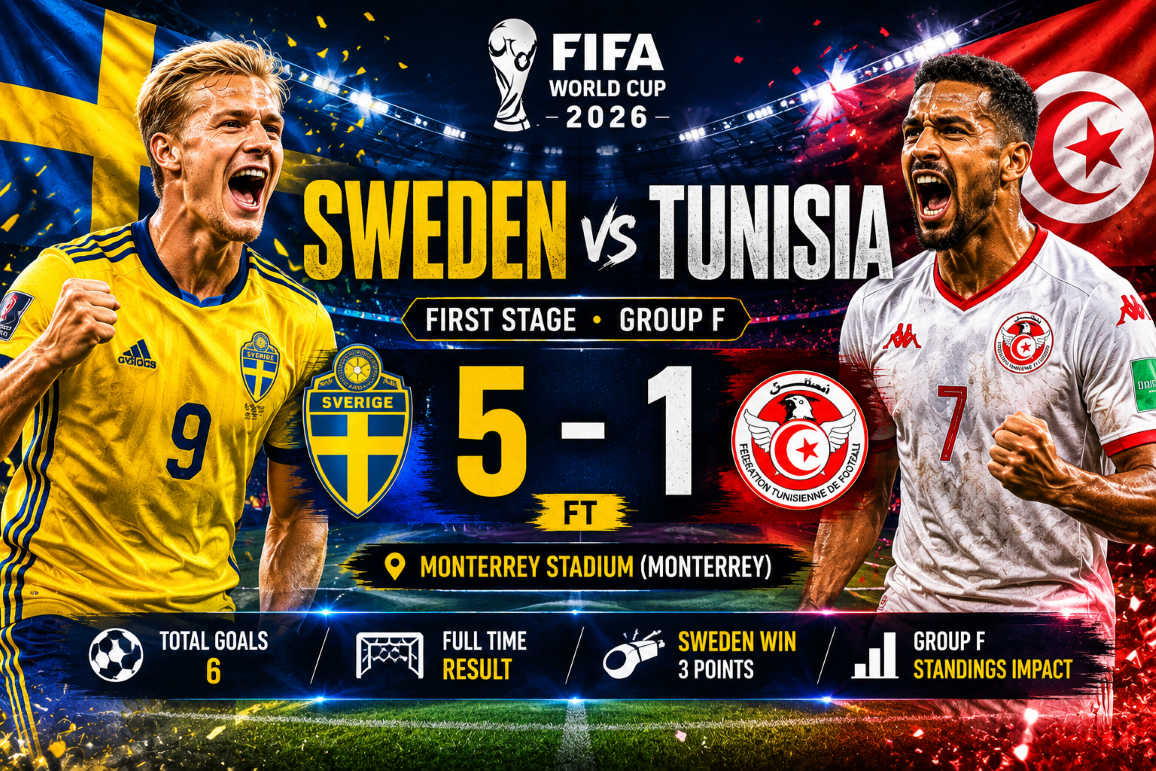
Sweden delivered one of the most impressive performances of the FIFA World Cup 2026 group stage, securing a convincing 5-1 victory over Tunisia at Monterrey Stadium. The Scandinavian side showcased attacking efficiency, tactical discipline, and clinical finishing to collect three valuable points in Group F.
From the opening minutes, Sweden demonstrated their intent to control the match. Their high-energy approach and organized structure allowed them to dominate possession, create numerous scoring opportunities, and maintain pressure on the Tunisian defense throughout the contest.
Match Summary
The match began with Sweden pushing forward aggressively, looking to establish an early advantage. Their attacking movement and quick passing combinations created several dangerous situations, eventually leading to a breakthrough that shifted momentum firmly in their favor.
Tunisia attempted to respond with disciplined defensive play and counterattacking opportunities, but Sweden’s overall quality proved difficult to contain. As the match progressed, the Swedish side continued to capitalize on openings and steadily extended their lead.
First Half Analysis
Sweden controlled much of the first half through intelligent midfield play and effective ball circulation. Their ability to transition quickly from defense to attack repeatedly caused problems for Tunisia, who struggled to establish sustained periods of possession.
The Swedish attack operated with confidence and precision, allowing the team to build a strong foundation before halftime. Tunisia remained competitive but found it challenging to cope with Sweden’s relentless pressure.
Second Half Dominance
The second half saw Sweden continue their attacking momentum. Rather than protecting their advantage, they remained committed to creating chances and maintaining control of the match.
Tunisia managed to find a goal and briefly threatened to build momentum, but Sweden responded professionally and ensured there would be no comeback. Additional attacking success allowed them to secure a comprehensive and deserved victory.
Key Match Statistics
- Final Score: Sweden 5-1 Tunisia
- Competition: FIFA World Cup 2026
- Stage: First Stage – Group F
- Venue: Monterrey Stadium, Monterrey
- Total Goals: 6
- Winning Team: Sweden
Sweden’s Tactical Excellence
One of the standout aspects of Sweden’s performance was their tactical organization. The team maintained defensive stability while committing numbers forward in attack, creating a balanced and highly effective game plan.
The midfield played a crucial role in controlling possession and dictating the tempo, while the attacking unit consistently found space and exploited defensive weaknesses.
“Sweden’s 5-1 victory demonstrated their attacking power, tactical discipline, and growing confidence in Group F.”
Tunisia’s Effort Despite Defeat
Although the result was disappointing, Tunisia showed determination and resilience throughout the match. The team continued to compete despite facing a difficult opponent and managed to produce moments of attacking quality.
The experience gained from competing against a strong Swedish side could prove valuable as Tunisia prepares for its remaining group-stage fixtures.
Impact on Group F Standings
The emphatic victory strengthens Sweden’s position in Group F and provides a significant boost to their goal difference. In a tightly contested World Cup group, such a convincing result could become an important factor in determining qualification.
For Tunisia, the defeat increases the importance of securing positive results in upcoming matches as they continue their quest to advance to the knockout rounds.
Player Performances
Sweden’s squad delivered a complete team performance, with contributions across every area of the pitch. The attacking players demonstrated clinical finishing, while the midfield and defensive units ensured the team remained organized throughout the match.
Tunisia showed flashes of quality but struggled to consistently challenge Sweden’s defensive structure and control the flow of the game.
Looking Ahead
Sweden will carry substantial momentum into their next Group F encounter after such a dominant display. The team’s balance between defensive organization and attacking effectiveness suggests they could emerge as one of the stronger teams in the group.
Tunisia will focus on regrouping and identifying areas for improvement as they prepare for the challenges ahead. With points still available, their qualification hopes remain alive.
Conclusion
Sweden’s 5-1 victory over Tunisia at Monterrey Stadium was a statement performance in the FIFA World Cup 2026 Group F campaign. Combining attacking flair, tactical discipline, and relentless energy, Sweden secured a memorable win that significantly boosts their ambitions of reaching the knockout stage. As the tournament progresses, this result may prove to be one of the defining performances of the group phase.